
Redefining collaborative care through the human-animal bond
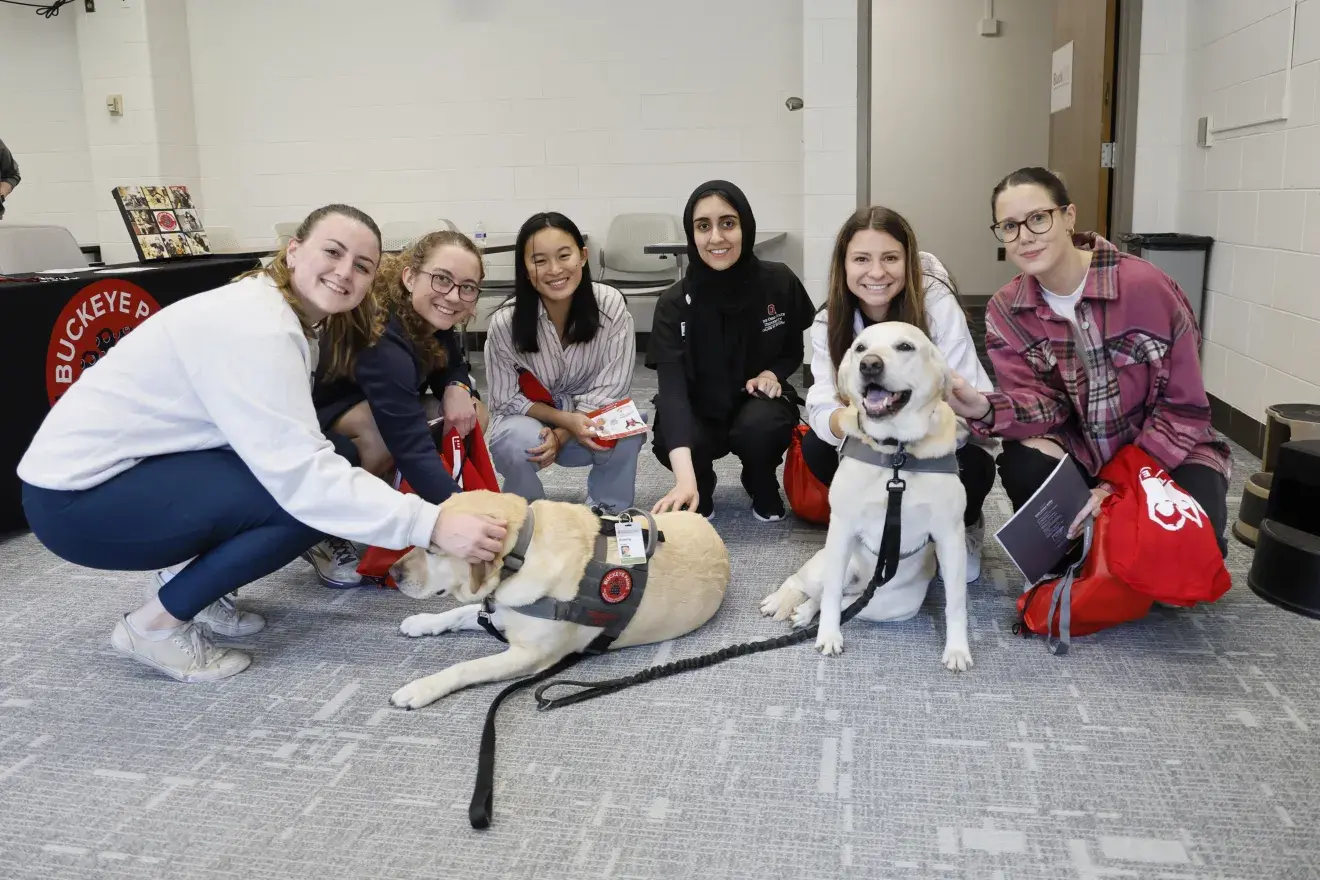
Imagine a veteran sitting in a quiet consulting room. Beside him is a dog.
To a nursing student, that dog might be a vital sign stabilizer, lowering the patient's cortisol levels so he can finally speak. To a social work student, that dog is a bridge to trust, a way to reach a person who has spent years behind a wall of trauma. To a veterinary student, the health of that dog is a key to the veteran’s own resilience and needs routine care as an animal.
In that one room, you have a medical reality, a mental health journey and a veterinary need. Traditionally, our students would graduate and encounter that room from only one angle. They might see a "patient," a "client" or a "canine."
But the reality is, it’s not just a person or a pet. It’s a relationship between a human and a companion animal.
Recognizing this, a team of leaders across The Ohio State University decided to change the script through a deliberate partnership with The Ohio State University College of Veterinary Medicine, The Ohio State University College of Social Work, The Ohio State University College of Nursing, The Ohio State University College of Food, Agricultural, and Environmental Sciences (CFAES), The Ohio State University Office of Interprofessional Practice and Education and The Ohio State University Wexner Medical Center. This partnership was born from a simple realization; we are all taking care of the same families.
To further strengthen this commitment, a new course titled "Foundations of the Human-Animal Bond" will soon be offered to students at Ohio State. This course will equip future professionals with the knowledge and skills to support the unique relationships between people and their companion animals to improve health care delivery.
This approach fosters empathy, deeper understanding and prepares learners to deliver comprehensive support that recognizes the importance of the human-animal bond.
This course will help learners understand:
- The human-animal bond is a health tool. A patient is more likely to engage in their own recovery if they know their animal is safe and cared for.
- Resilience has a heartbeat. Animals help humans after they experience trauma.
- Barriers are systemic. When a family may need resources, they aren't looking for "human help" or "animal help." They are looking for help for their whole family.
As students collaborate, they discover that healing is not confined to a single discipline or perspective. Together, they are redefining what it means to care— for people, for animals and for the bonds that unite them.